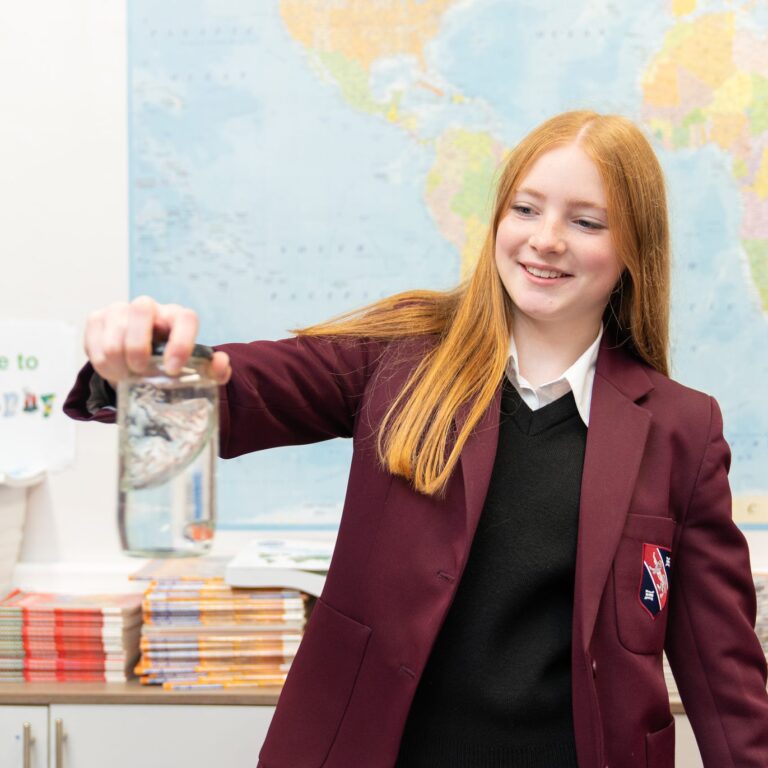
Geography A Level

Geography A level is an exciting and dynamic course relevant to the world we live in today. It is a popular A level subject as it combines successfully with both the Humanities and Sciences. It encourages pupils to think holistically about the physical and human aspects of Geography and will develop one’s ability to collect and analyse data in scientific enquiry, to develop a range of core skills and to improve your critical thinking and decision making about current issues.

Key skills are learnt, such as:

  • Environmental understanding, population pressures and climate change
  • Appreciation of nature and physical landscape
  • Development of team building skills when undertaking field work
  • The varied roles of decision makers and how they impact on lives across the globe.

We follow the AQA exam board which covers core topics of physical and human geography and includes an individual study on a geographical investigation on the student’s choice.

The Department offers a wide range of additional opportunities including Royal Geographical Society membership, lectures, competitions and a variety of trips.
Course Content

The course is divided into 3 components of Physical Geography, Human Geography and a Geography Fieldwork Investigation which is a Non-Examined Assessment (NEA) summarised below:

Component 1

Physical Paper

Water and carbon cycles 

This section focuses on water and carbon stores on Earth’s surface and their cyclical relationships. Understanding these elements is fundamental to physical geography.

Coastal systems and landscapes 

This section focuses on coastal zones, landscapes, and fundamental geomorphological processes.

Hazards 

This section studies natural hazards caused by the lithosphere and the atmosphere. It focuses on their origins, characteristics, and human responses.

Component 2

Human Paper

Global systems and global governance 

Focuses on globalisation – the economic, political and social changes associated with technological and other driving forces which have been a key feature of global economy and society in recent decades.

Changing places 

This section explores people’s connection to places, how they experience them, and the factors that impact their development over time.

Population and the environment 

This section explores the connections between physical geography, population, health, economic development, and the natural environment.

Component 3

Geography Fieldwork Investigation (NEA)  

Pupils complete an individual investigation of 3000–4000 words. The individual investigation must be based on a question or issue defined and developed by the student relating to any part of the specification content. This is worth 60 marks and 20% of A level.

Looking Further Ahead

A wide variety of skills are developed by the geography student. These include the basic skills of communication and numeracy together with many of a more specific nature, eg problem solving, data collection, analysis and interpretation. In addition, the Department prepares students for university with day trip visits, lectures from Royal Holloway and the Royal Geographical Society and opportunities to attend student conferences.

The Russell Group of top British universities rank Geography amongst their most desirable A levels to have for applying to university.